“Unusual” forecasts for South Central Coast tourism in 2023

South Central Coast tourism makes a large contribution to the regional economic structure and to local development. 2022 ended amid doubts about economic recession, international conflicts and the consequences of the Covid-19 pandemic, so 2023 carries question marks for the market.

South Central Coast tourism, like Vietnam’s tourism as a whole, was subdued in late 2021–2022, but it has since awakened far beyond expectations.
From the forecast that Vietnam will see a surge in international visitors
In its plan, the tourism sector has set a target for 2023 of welcoming 110 million visitors, including about 8 million international visitors and about 102 million domestic visitors, with total tourism revenue of about VND 650,000 billion. However, this plan does not include the tourism promotion programs the sector is focusing on in early spring 2023 or the breakthrough developments from neighboring countries changing their Covid-19 policies.
In recent years, Vietnamese travelers’ habits have changed significantly and they seek newer discoveries, which has given rise to many new tourism focal areas. Even foreign visitors who come to Vietnam many times also want to experience new things besides familiar places, which is inevitable in development.

Alongside the tourism development of localities, the contribution of tourism operating groups is increasingly important in attracting visitors to enjoy tourism services. The clearest proof is that in just 10 years from 2012 to 2022, countless new bright spots have appeared on Vietnam’s tourism map alongside traditional tourism regions.
The clearest example is Phu Quoc tourism, which has made a special breakthrough, becoming an international-class resort that attracts not only domestic but also foreign visitors and even hosts international-scale events. Other tourist destinations that can be named include Luong Son – Hoa Binh, Phu Yen, and Quy Nhon – Binh Dinh, which have been promoted since 2015 although they were not so prominent before. With just the local turning-point plans, tourism regions are forming faster and growing larger.
South Central Coast tourism will have a different face
This can be said to be one of the rare regions in Asia with an “extended” tourism structure, meaning the climate across areas is similar yet spans many shades with layers of culture that vary from area to area. The region is now under the government’s macro-level planning, and localities are turning marine tourism into a sustainable, large-scale local economic sector.

In Binh Dinh in particular, the province has long planned to develop 4 northern areas – Hoai Nhon, Hoai An, Phu My and An Lao – into 4 new tourism centers, including internationally scaled project plans. According to current statistics, Phu Cat Airport is also the civil airport with the largest transit volume, behind only airports designated as international. In the South Central Coast region, Phu Cat is also helping relieve Da Nang Airport with direct flights to South Korea. The Binh Dinh Provincial People’s Committee has just sent an official letter asking the Ministry of Transport to propose that the Prime Minister approve the policy of surveying and planning the expansion of Phu Cat Airport, aiming to develop it into an international airport.

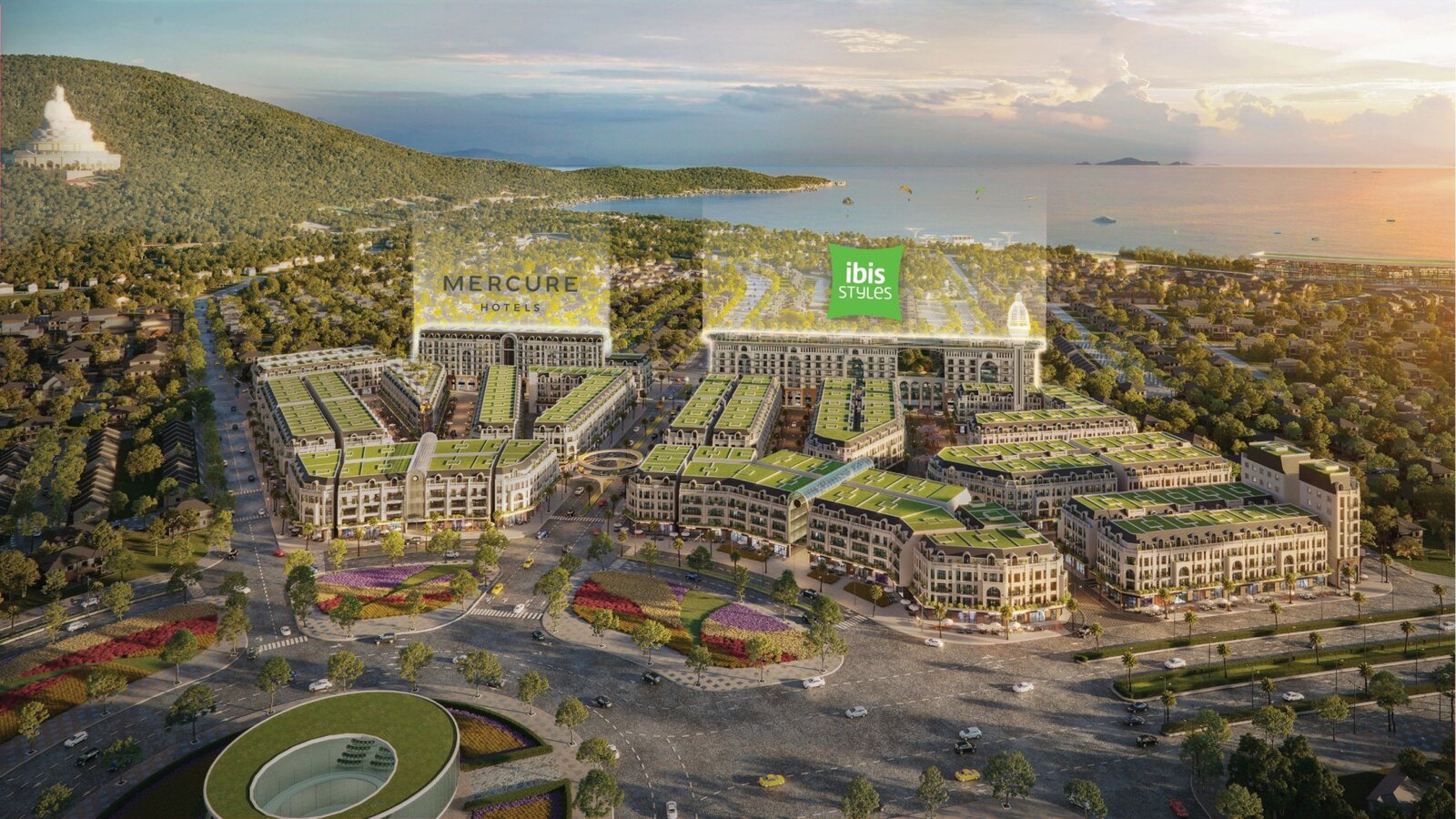
The South Central Coast is attracting many new projects. (Rendering of a project by Lac Viet Group.
According to experts’ forecasts, tourist areas were previously understood as closed enclaves for visitors to enjoy private spaces, but the trend is toward many large coastal urban areas combining living value with tourism. With relatively abundant land and strategically visionary planning, in the near future South Central Coast tourism is forecast to have new, attractive, fashionable types of tourism with multi-dimensional value, accompanying other sectors such as real estate, culture, history and sports…
Large-scale seaside service complexes will be the highlight that attracts tourists and increases premium experience value, especially by developing nighttime services for tourists, helping South Central Coast tourism grow toward a high-end, internationally branded direction.
_Hoang Nam_