Real estate concepts mentioned most after 2023

Along with changes in legal factors and the separation of urban functions, in 2012–2021 many new real estate concepts were formed that attracted most customers and also reflect the professionalism of the real estate market. In the coming period the market will have even more new concepts, which is also one way to gauge the new stage of development of the real estate market.
Before 2012 the market had only medium-scale projects and unclear legal status, but after the market boomed again, many new real estate concepts appeared that make it easier for customers to understand a product’s function, such as Shophouse, apartments for rent and Officetel – all appearing after 2012.
After the successful real estate cycle, it cannot be denied that in 2022–2023 the real estate market entered a cycle transition with relatively subdued transactions. According to many assessments by experts working in real estate investment, the market will remain very good in the coming period, but competition is relatively strong, and developers must create products with special features that are easier to absorb and profitable. From competition and product analysis, experts also assess that more new definitions will appear.
Concept: Urban – tourism region
A planning concept with a large land fund (about 5,000 ha or more) licensed by a provincial-level People’s Committee or higher. This concept avoids fragmented, unsynchronized, leopard-skin-style development that easily causes obsolescence and exceeds population, social and traffic indicators, and, in the long-term view, later detailed plans must follow the overall regional master plan.
At present, in its orientation planning decision, Binh Dinh province issued Decision QD-4389 UBND, treating the Cat Tien – Phu Cat area as the core of an urban – tourism region of up to 10,000 ha, considered one of the first areas tied to this concept.

(Photo of part of the Cat Tien – Binh Dinh urban – tourism region)
Concept: Sharing – experiential tourism:
Tourism is an ever-growing need in social life. According to some statistics from travel companies, the experience rate of visitors increases by an average of 15% per year, and travel spending also increases by about 18% per year. The sharing – experiential tourism segment is a newly emerging type in which customers are more often active outdoors and enjoy more varied activities rather than being confined to resorts or visiting repeated spots along a preset route. This customer group also stays longer and demands much more local culture, so additional tourism facilities are needed, such as marine experience parks, pedestrian streets and check-in spots…

(Photo of a pedestrian street)
Pedestrian streets will be an important highlight of the next tourism trend

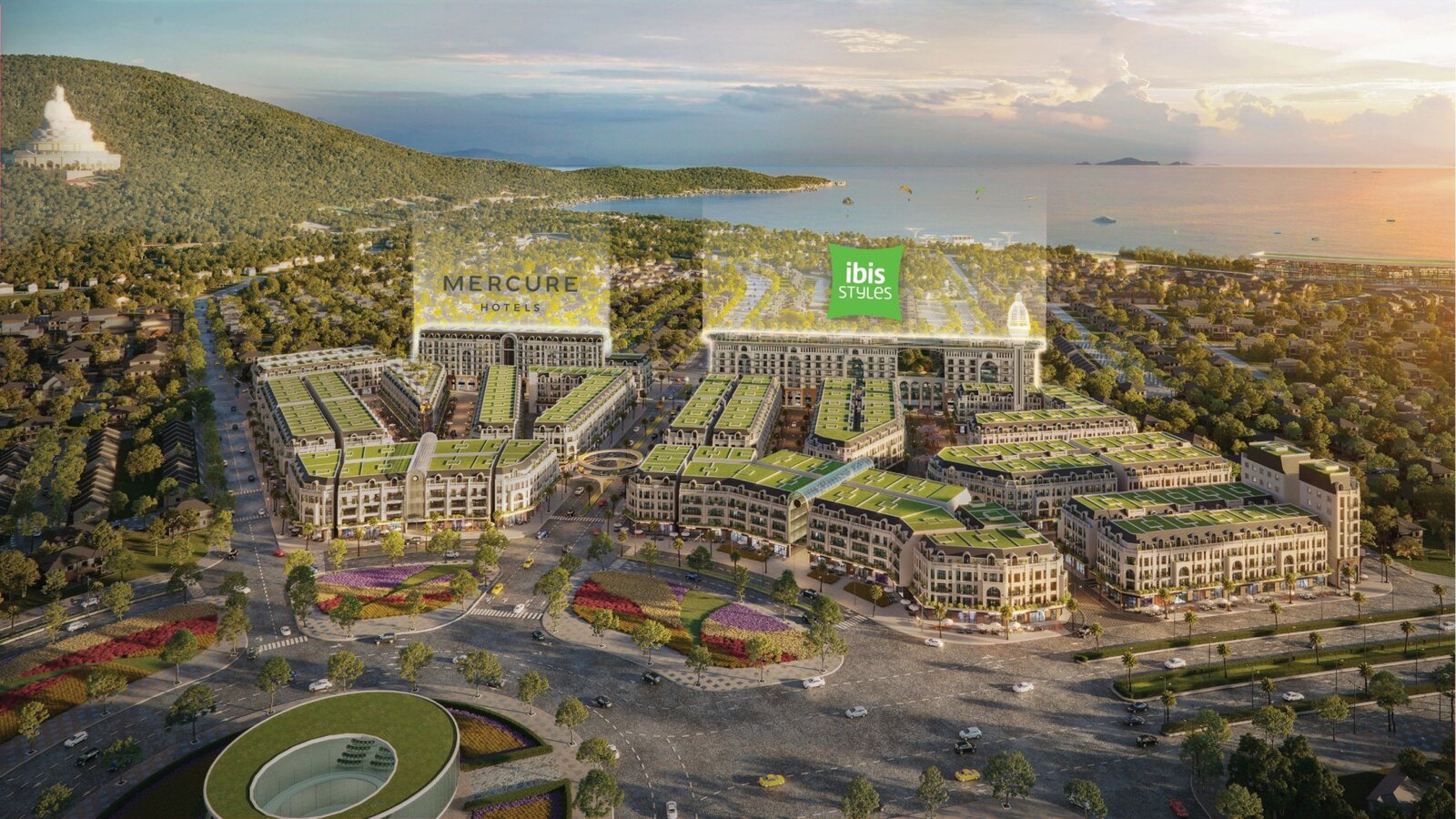
(Photo of the Imperial Oasis pedestrian street of Lac Viet Group – in Binh Dinh)
Concept: Group profit-sharing operation
Profit-sharing between investors and operating developers is not very new, but the form in which investors share space and profit from it together will gradually appear and make strong legal progress instead of being spontaneous as before. This applies especially to legal matters concerning agreements to jointly use common space, such as co-owning parking lots, co-owning rooftop space systems, co-owning shophouse sidewalks…

(The Imperial Oasis project has an agreement for joint commercial operation of the rooftop)